A Look at Leucine: The Trigger Hypothesis
How a single branched-chain amino acid acts as the trigger that switches on the mTOR pathway and sets muscle building in motion.
Health & ScienceUpdated
Fitness has long been grounded in science, as seen in our understanding of muscle synthesis and recovery. Rooted in nitrogen balance theory, which assesses muscle protein metabolism by comparing nitrogen intake to loss, the focus has traditionally been on total protein intake, often overlooking protein type and timing. The logic was simple: more protein, more muscle.
Then the logic got more complicated. Squint at the label and you’ll find that most protein shakes now (the good ones, at least) include branched-chain amino acids, or BCAAs: essential amino acids important for muscle growth and protein synthesis. But only one, leucine, serves as the proverbial “trigger” that activates muscle protein synthesis and sets the whole muscle-building process in motion. That insight, formalized in 2006 as the Leucine Trigger Hypothesis, has reshaped how we think about optimizing growth and recovery.
How it works
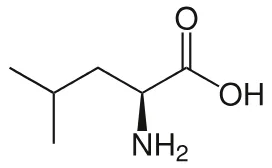
Leucine is the most important BCAA for MPS because of its unique ability to directly activate a key anabolic pathway known as mTOR (mechanistic target of rapamycin), a central regulatory hub that controls muscle protein synthesis.
Before the Leucine Trigger Hypothesis, the understanding was that all essential amino acids were needed in the right proportions to maximize protein synthesis. Leucine, isoleucine, valine and the other BCAAs were recognized for their role in recovery, but leucine hadn’t yet been singled out as the critical trigger.
Step by step
1. Initiation. When you eat leucine-rich foods or supplements, leucine levels in your bloodstream rise. Inside muscle cells, leucine binds to specific sensors and activates mTOR. Like a master switch, this pathway has to be on before muscle growth can start.
2. Activation of mTOR. Once active, mTOR kick-starts the translation phase of protein synthesis, the creation of new proteins from amino acids. It increases the activity of ribosomes (the cell’s protein-building machinery), letting them translate more messenger RNA into muscle protein. In effect it tells the body: start building now.
3. Translation and growth. With mTOR active and the ribosomes engaged, muscle cells synthesize new proteins, leading to repair, growth, and adaptation. This matters most after intense exercise, when muscle fibers have tiny tears that need new protein to rebuild stronger.
Structural properties
Leucine’s ability to activate mTOR comes mainly from its branched-chain structure, which lets it interact with specific regulatory proteins such as the leucine sensor Sestrin2. That interaction causes a conformational change that activates the mTOR complex and initiates protein synthesis.
Among the amino acids, leucine also has the highest affinity for these leucine-binding proteins, making it the most potent activator; even small fluctuations in leucine levels are detected. Leucine also works as a proxy for the availability of other essential amino acids. Because it’s abundant in high-quality protein (meat, fish, dairy), its presence is a good sign the body has enough of everything else it needs to build new protein.
Evolutionary pressure
Humans and other animals came to use leucine as an mTOR trigger because of evolutionary trade-offs. Producing essential amino acids like leucine requires complex, energetically expensive biochemical pathways, and evolution tends to optimize for energy. For early humans and their ancestors, it was cheaper to get leucine from food than to maintain the machinery to make it.
Plants and bacteria, by contrast, kept the ability to produce leucine because they live in niches where nutrients may be scarce. For humans, a diet that specialized in high-quality protein made internal production unnecessary.
What happens without enough leucine?
- Reduced mTOR activation. Without enough leucine, mTOR isn’t adequately activated, weakening the signal for protein synthesis even when other amino acids are present.
- Muscle catabolism. Instead of building new muscle protein, the body may break down existing muscle for energy and amino acids.
- Impaired repair. Low leucine slows repair, leading to prolonged soreness and less adaptation.
- Less muscle over time. Chronically low leucine means chronically lower protein synthesis, making it hard to gain or keep muscle.
Timing and dosing
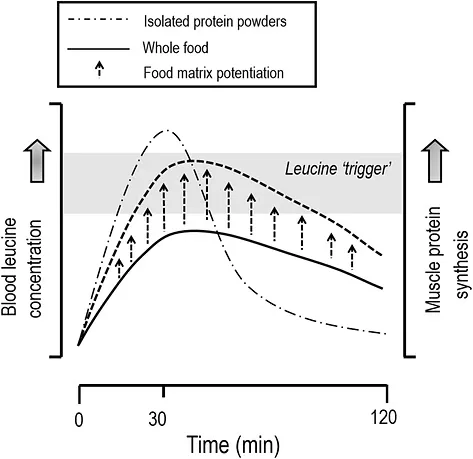
Research suggests around 2–3 grams of leucine per meal is needed to optimally stimulate MPS in healthy adults. Leucine is both a nutrient signal and a regulator of protein metabolism, but its effect depends on how and when you take it.
Leucine enters the bloodstream quickly and peaks within 30–60 minutes. That peak matters because mTOR responds most strongly when leucine rises fast and high. The effect is transient, though: activation fades as blood leucine falls back to baseline.
Taking leucine around resistance training can make it significantly more effective. Exercise sensitizes muscle cells to nutrient signals, making them more responsive to leucine’s activation of mTOR. This is the so-called anabolic window.
For optimal MPS, space leucine-rich meals 3–4 hours apart to allow periodic mTOR activation and avoid desensitization. Repeated pulses of signaling from intermittent high-leucine meals have been shown to work better than continuous low-level stimulation.
Closing thoughts
We understand leucine’s role as a key activator of MPS well, but its broader impact on health and performance is still emerging. Preliminary evidence suggests leucine may influence fat metabolism and energy balance. Could it play a role in body composition beyond muscle? Does high leucine intake inhibit autophagy, with consequences for cellular health and longevity?
If history is any guide, we’ll find that leucine isn’t the only piece of the puzzle, just the most outspoken one for now. Science has a way of making firm answers feel temporary, and we may eventually learn it’s not just leucine but a dozen factors we haven’t named yet.
Comments
No comments yet. Be the first.